Blog

Navigating the Maturity of Generative AI: Yseop’s Approach to Continuous Improvement

Share This Post

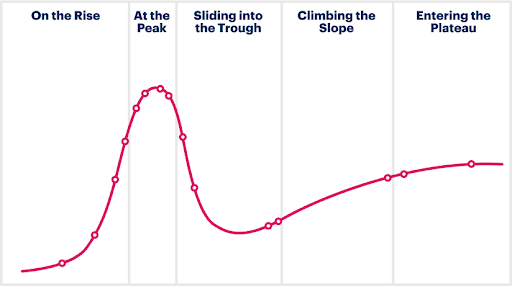
Gartner’s analysis suggests that the landscape of Generative AI is undergoing a significant shift. The rapid, exponential growth that once defined the movement is now transitioning to a phase of stabilization and incremental improvements. 

This evolution should not be viewed with concern, but as a necessary step toward building reliable, production-ready AI systems. At Yseop, we embrace this transition as it aligns with our pragmatic approach to AI development and implementation.

The Generative AI plateau refers to the phase where rapid model breakthroughs slow down, and the focus shifts toward improving reliability, efficiency, cost optimization, and real-world deployment of AI systems.

What Does the Generative AI Plateau Mean for Life Sciences?

The Generative AI plateau means that organizations should shift focus from experimenting with new models to deploying reliable, scalable, and cost-efficient AI solutions in real-world workflows.

Why Generative AI Is Entering a Plateau Phase

Gartner’s analysis suggests that generative AI has reached a plateau in terms of operational capacity. While the days of daily groundbreaking advancements may be behind us, this phase of incremental improvement allows us to refine and optimize existing technologies. It ensures systems are robust, reliable and ready for widespread adoption. At Yseop, we are not merely riding this wave; we are actively shaping it by continuously enhancing our platform’s capabilities and validating its operational effectiveness.

Over the past two years, Generative AI developments appeared seemingly overnight. Today, substantial advancements take a few months to materialize. This shift signifies a move towards a more sustainable and manageable pace of innovation.

Navigating the Maturity of Generative AI: Yseop’s Approach to Continuous Improvement
Hype Cycle for Artificial Intelligence, 2024

How Companies Should Respond to the AI Plateau

As we approach a plateau¹ in Generative AI development, with GPT-5 possibly postponed to the end of 2025 and new models achieving similar performances on known benchmarks, the focus now shifts towards optimizing costs, enhancing performance², and scaling applications effectively. The next few years will see progression towards reducing the size and increasing the efficiency of AI models. These optimizations, while not immediately attention-grabbing, are critical to the sustained success and ³scalability of AI technologies.

For example, in regulatory writing, this means focusing less on experimenting with new models and more on ensuring consistent, traceable document generation that can scale across submissions.

At Yseop, we are not simply observers of this transition; we are active participants. By capitalizing on the stability of the current phase, we are ready to deliver innovative, reliable and efficient AI solutions that meet the evolving needs of our clients. The plateau is not a peak but a foundation upon which we will build the future of AI-driven content generation.

In life sciences regulatory affairs, this shift is particularly important, where AI systems must prioritize reliability, traceability, and compliance over rapid experimentation.

Yseop Copilot is designed to not only increase efficiency but also to make work more enjoyable and fair. To learn more about how Yseop’s generative AI solutions can accelerate your business, please contact us at hello@yseop.com. If you are interested in further exploring Yseop Copilot, get a demo of our automated content generation here


References

¹Murati, M. (2024). “Next generation of GenAI will be PhD level in 18 months to 2 years”. 

Performances plateauing: AI community trying to push AI a step further as LLM show signs of stagnant performances:

²Hugging Face (2024). “Performances are plateauing, let’s make the leaderboard steep again.” Updating their evaluation leaderboard. 

³Chollet, F. (2024). Launch of the “Arc Prize Challenge”. A very particular challenge where AI systems are asked to solve complex problems. 

The Generative AI plateau refers to a phase where rapid breakthroughs slow down and the focus shifts to improving reliability, efficiency, and real-world deployment.

Generative AI is maturing, with fewer breakthrough improvements and more focus on optimizing performance, cost, and scalability of existing models.

It means businesses should focus on deploying AI in production, optimizing costs, and integrating AI into workflows rather than experimenting with new models.

In life sciences, AI must meet strict requirements for compliance, traceability, and reliability, making this phase of optimization critical for real-world adoption.

Companies should prioritize scalable infrastructure, reliable outputs, cost efficiency, and integration into operational workflows.

Scroll to Top